
Sex Offender Checks in Aransas County
The Texas Public Sex Offender Registry is the primary public channel for Aransas County registry information. Texas DPS publishes the statewide records supplied and verified through local registration authorities. No separate, verified Aransas County registry portal was found, so a county-filtered DPS search is the dependable starting point. The National Sex Offender Public Website adds records from other states, territories, tribes, and participating jurisdictions when a search crosses Texas lines.
Begin broadly enough to avoid a false negative. County search is useful because postal cities and municipal limits do not always match. Then narrow by a specific address or a person's name and aliases. Keep the date of the search because an address, registration authority, compliance notation, or duty-ending date may later change. A missing result does not prove a person has no criminal case or prior sex-related offense.
The Texas DPS registration program overview explains the system that feeds the public search.
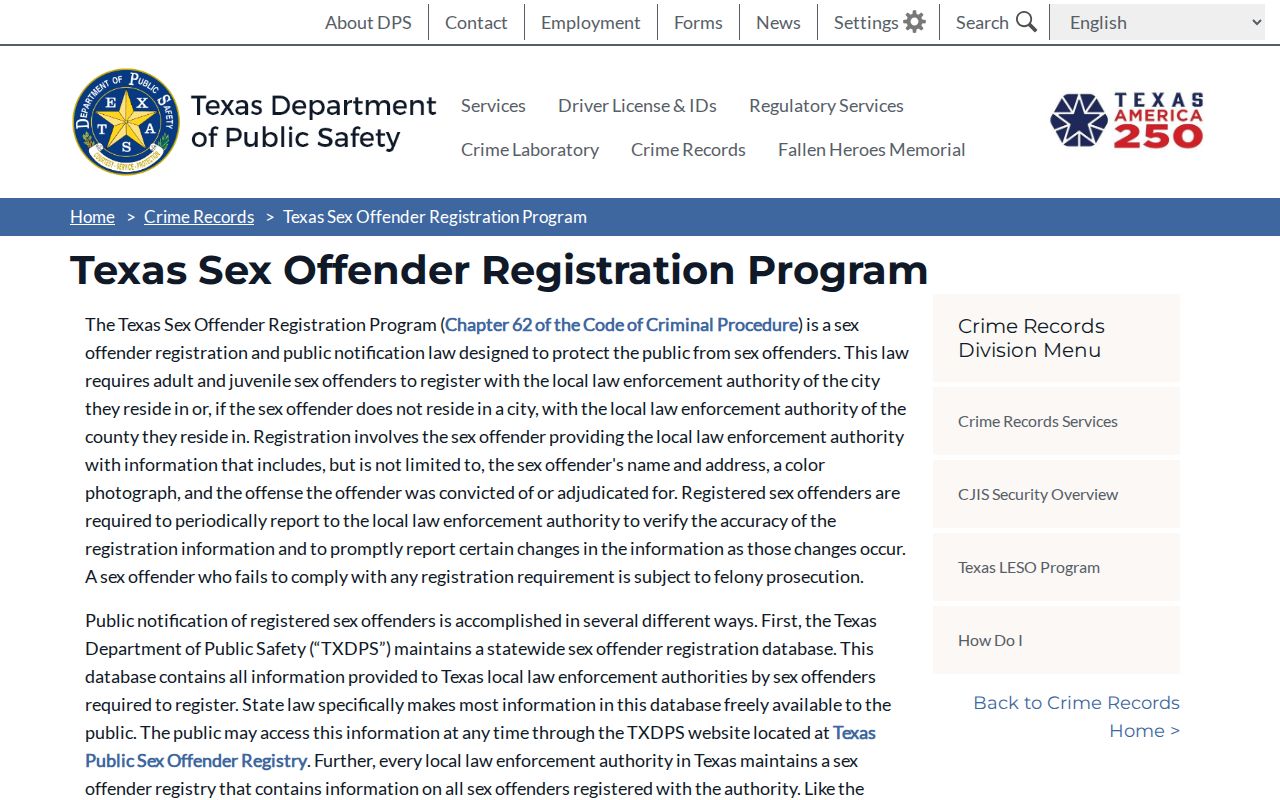
That program page is the better source for statewide administration, while the live registry supplies individual public profiles.
How to Search the Texas Public Sex Offender Registry
The DPS interface offers distinct name, address, higher-education, and institute-of-higher-education modes. Its county and ZIP options help isolate Aransas County records, while address and map tools support location-based awareness. Search screens can change, so read the live labels and conditions before relying on a radius.
- Open the official Texas registry and review its conditions of use. Start with Aransas County to reduce errors caused by city-limit and ZIP assumptions.
- Use the address or map mode around the location of concern. Confirm the live radius choice instead of assuming a fixed distance.
- For a known person, search the name and any documented aliases. Compare multiple identifiers before deciding that a result is the intended person.
- Open the complete profile, note the primary registration authority and status, and record the search date. Contact that authority if information appears wrong.
| Search field | Control | Required | Use |
|---|---|---|---|
| Search by Name | Tab or mode | One mode | First and last name, with alias searching where available |
| Search by Address | Tab or mode | One mode | Street, city, ZIP, map, and live radius functions |
| County | Select list | No | Choose Aransas for a countywide result set |
| ZIP Code | Text | No | Narrows a geographic search but does not define municipal authority |
| Higher Education | Separate mode | One mode | Searches the registry's higher-education category |
The official Texas registry search screen shows the live search controls.
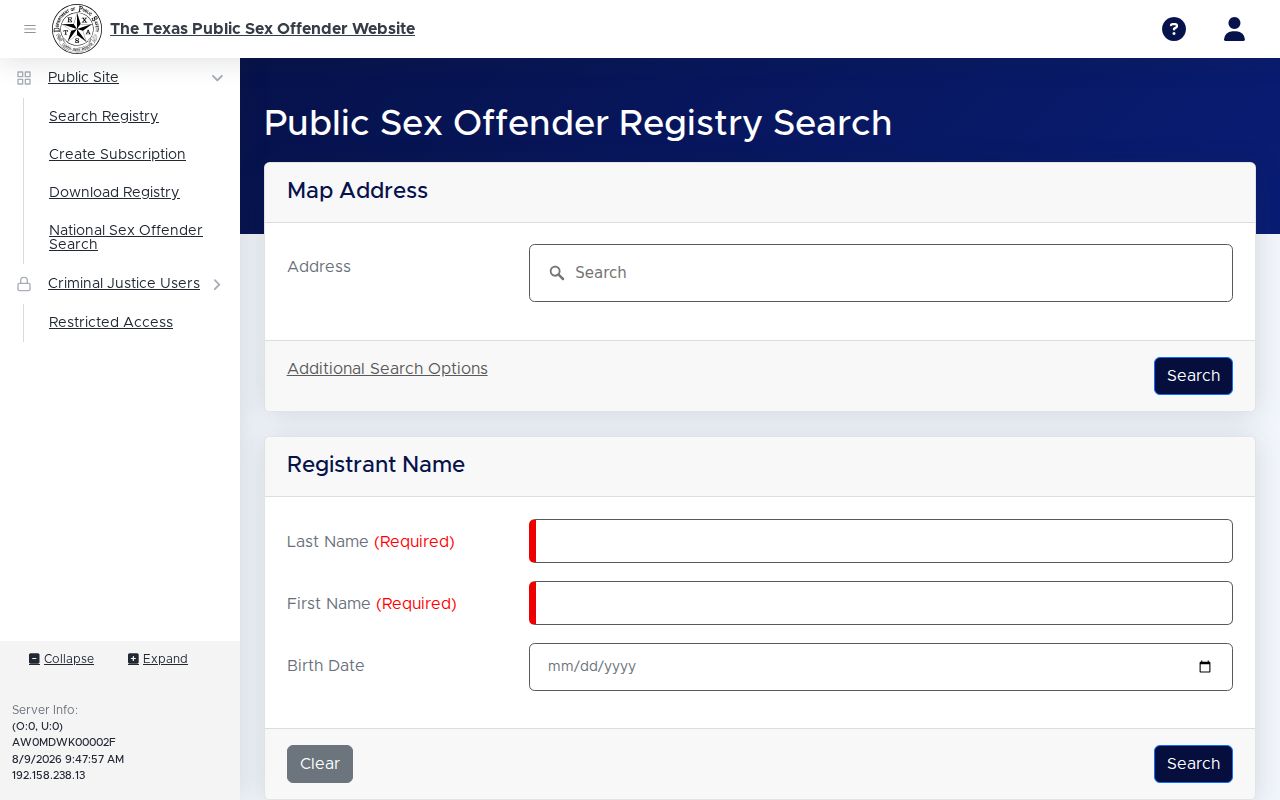
Using the current interface helps prevent mistakes caused by outdated instructions or third-party copies.
Aransas County Registry Searches Through NSOPW
Aransas County sits on the coast, but moves and travel do not stop at a jurisdiction line. The U.S. Department of Justice's National Sex Offender Public Website, or NSOPW, searches participating public registries through one national entry point. Use it after the Texas search when a person may have moved, an address is near a state boundary in another inquiry, or the relevant history could involve another jurisdiction.
The National Sex Offender Public Website is the official cross-state layer.
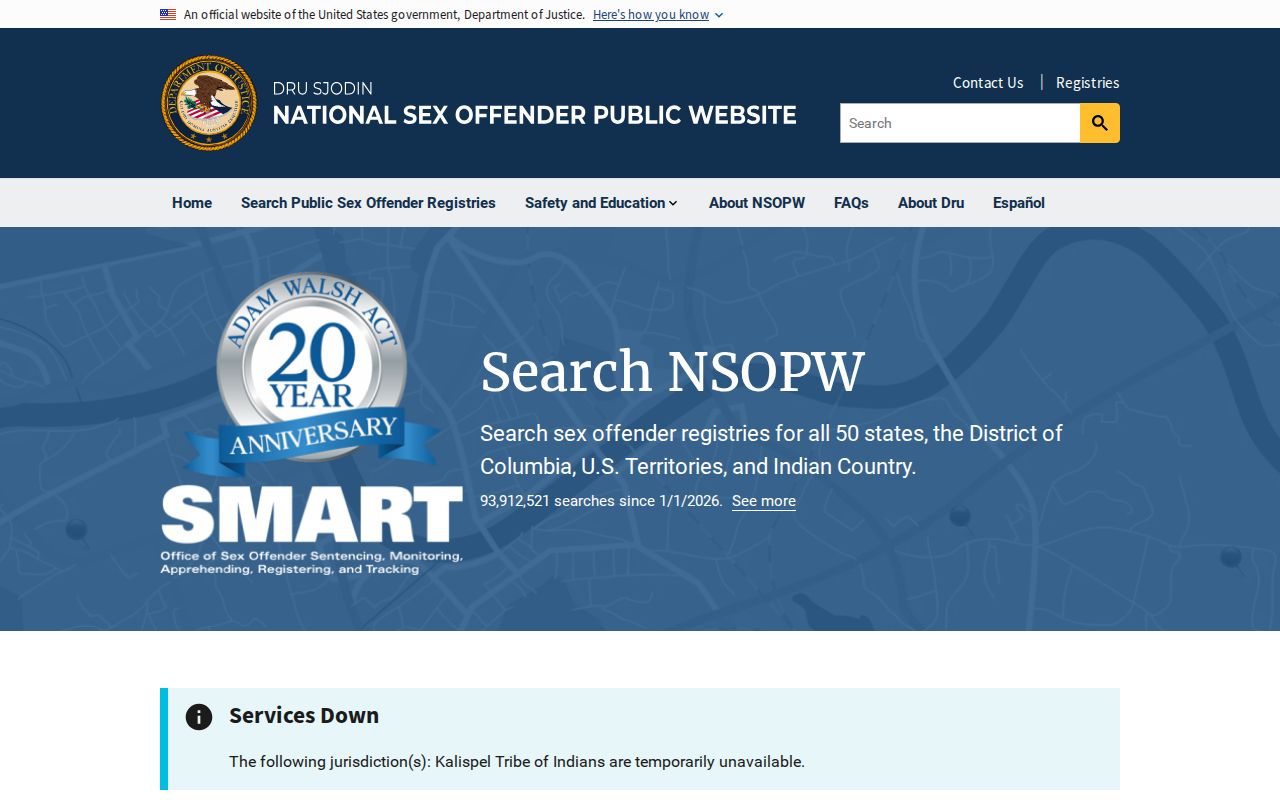
NSOPW supplements rather than replaces the Texas profile, which identifies the local authority responsible for verification.
Different jurisdictions publish different fields and update on different schedules. Repeat possible name variants and compare the reported jurisdiction, physical details, and offense information. Do not merge profiles based only on a common name.
Inside a Registry Profile
Article 62.005 of the Texas Code of Criminal Procedure separates public registry information from excluded fields. A public Aransas County profile may carry enough identifiers to distinguish people and understand the registration basis, but it is not an unrestricted dossier. Read each label literally, particularly the risk designation, status, registration authority, and ending-registration date.
| Name and aliases | Published identity names and reported aliases used for careful matching. |
|---|---|
| Photo and description | Photograph, sex, race, height, weight, hair and eye color, and reportable identifying marks. |
| Address and authority | Published address information and the agency responsible for local registration verification. |
| Offense information | Description, statute, conviction or adjudication date, jurisdiction, and victim-age category when public. |
| Risk and duty | Risk level, registry status, and any displayed ending-registration date. These are separate concepts. |
| Other identifiers | SID, physical marks, and reportable vehicle information may appear. |
The official text of Article 62.005 defines the public and excluded categories.
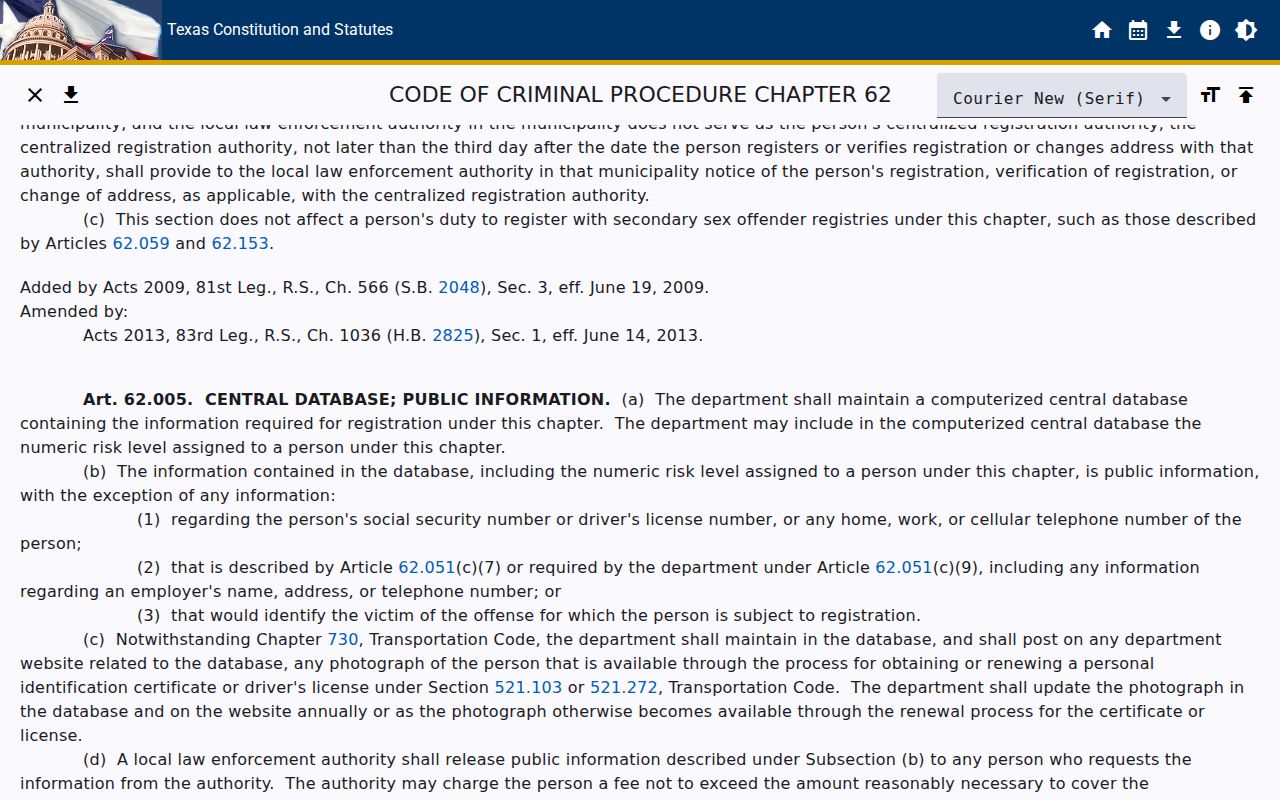
The statute is essential context because telephone numbers, driver-license data, employer details, victim identities, and other protected information must not be inferred from outside sources.
Aransas County Registry Fields Kept Private
Texas excludes Social Security numbers, driver-license numbers, telephone numbers, online identifiers, employer names and contact information, DPS-required confidential additions, and victim-identifying information from the public database. Juvenile information that a court orders nonpublic is also excluded. These boundaries protect information the law does not authorize the public registry to disclose.
Read absence carefully: no public field may mean the law excludes it, not that DPS or a local authority failed to collect it.
The full Texas registration chapter places Article 62.005 within the wider reporting and notification framework.
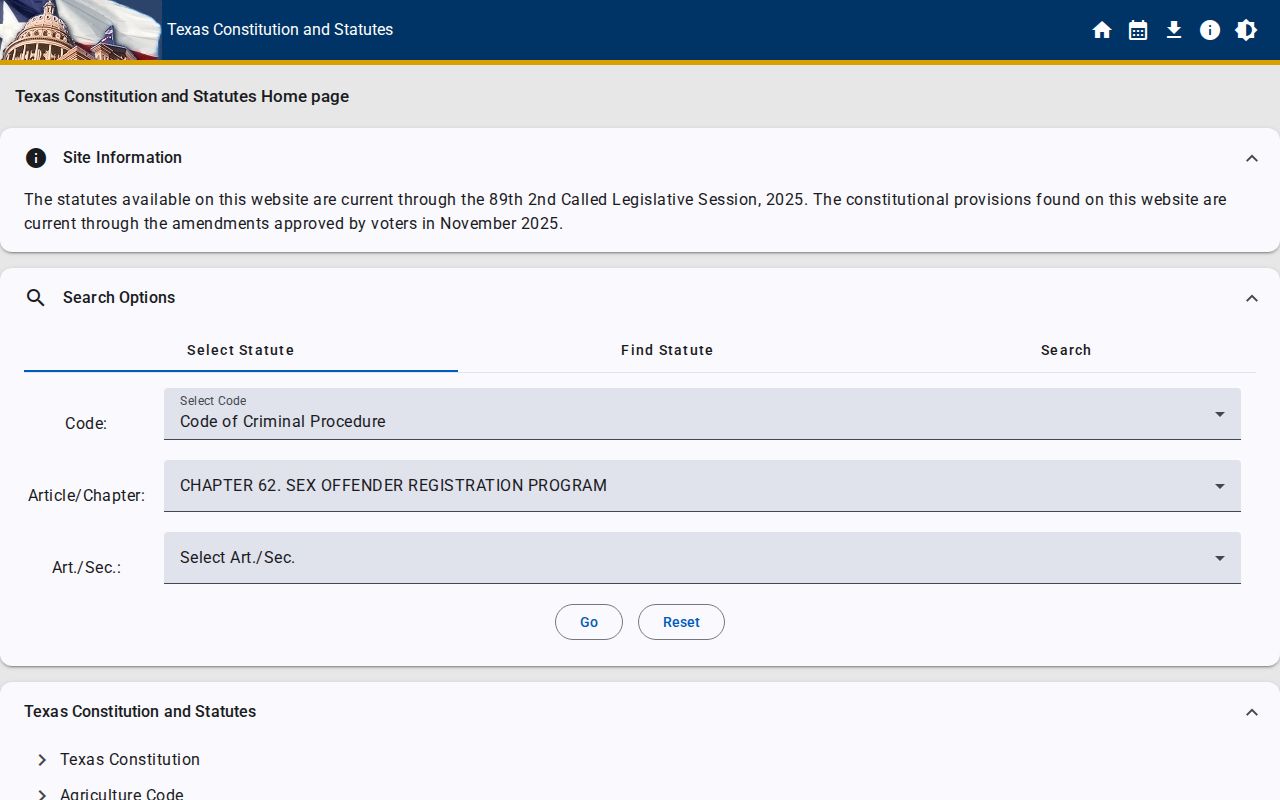
Consulting the chapter avoids treating a public profile as if it contains every detail held by government.
Texas Registration Levels and Requirements
Texas risk levels describe an assessment of danger, while registration duration follows the qualifying offense and applicable statute. A low, moderate, or high label does not independently determine when a duty ends, and it does not predict a particular future act. Civil commitment is a distinct court designation. Verification frequency likewise depends on the governing requirement and should be confirmed from the live profile and local authority.
| Designation | Meaning | Duration and verification |
|---|---|---|
| Level 1, low | Low danger; not likely to engage in criminal sexual conduct | Duration follows the offense statute; confirm profile and authority |
| Level 2, moderate | Moderate danger; may continue criminal sexual conduct | Duration and verification follow the controlling duty |
| Level 3, high | Serious danger; likely to continue criminal sexual conduct | Often subject to enhanced notification; verify statutory terms |
| Civil commitment | Court-designated sexually violent predator | Commonly lifetime; confirm the profile and current law |
The Texas DPS registry FAQ explains registration administration and commonly misunderstood duties.
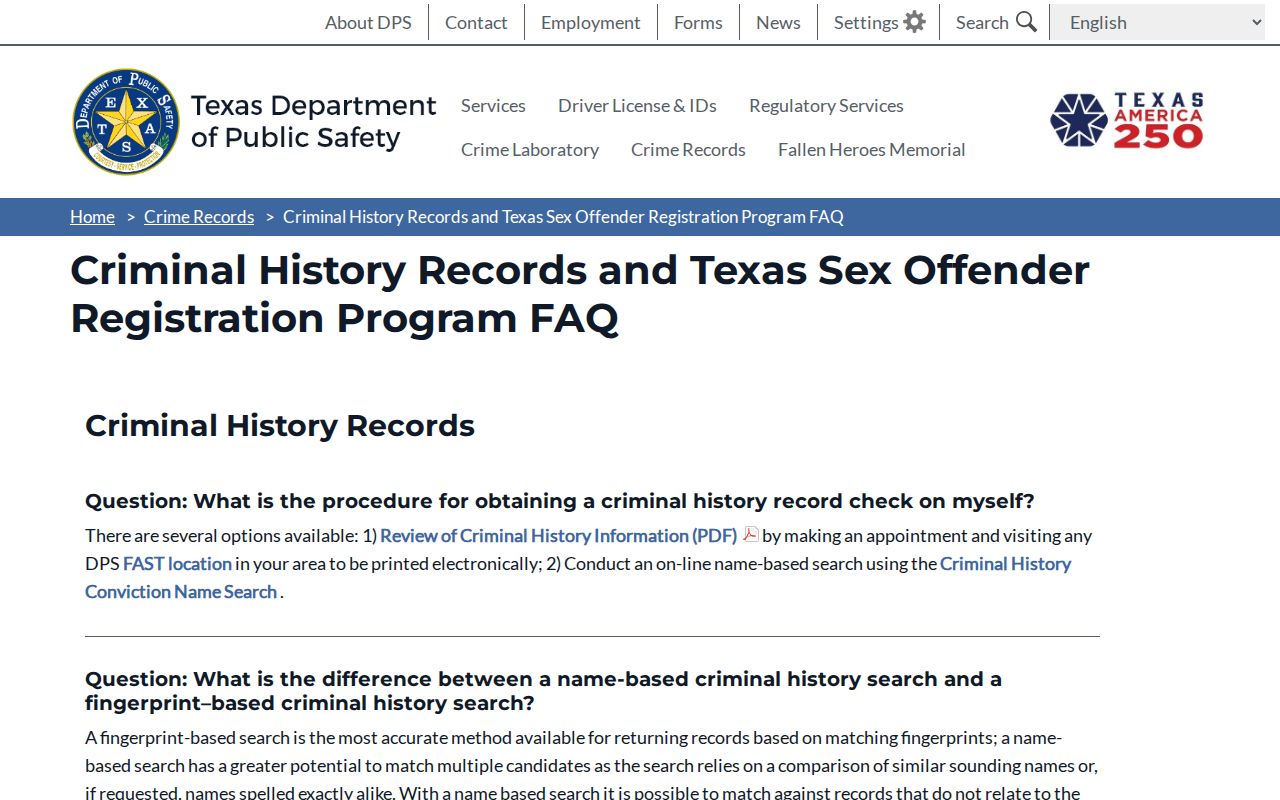
The FAQ should be checked with the statute because offense dates and legal changes can affect a particular duty.
Aransas County Offender Address Changes
DPS guidance says initial local registration is due no later than the later of the seventh day after arrival or the first date the authority's policy permits registration. A move generally requires advance reporting to the old authority and a post-arrival report to the new one on the statutory schedule. Because Rockport, Fulton, Aransas Pass, and unincorporated Aransas County route to different agencies, crossing a municipal boundary can change the primary registration authority even when the move is short.
Members of the public should use this fact only to understand which office can verify or investigate an entry. They do not supervise registration, demand documents from a registrant, or decide whether a duty was violated. Suspected noncompliance belongs with law enforcement.
Note: A profile's ending date and its risk level answer different questions and should never be treated as interchangeable.
Aransas County Registry Notifications
The statewide database provides continuous public access. Local registration authorities also maintain their records and may use publication allowed by law. Under the Texas notification framework, DPS sends English and Spanish postcards to the immediate community when a high-risk registrant or a civilly committed sexually violent predator is released or moves. That postcard process is not an alert for every Level 1 or Level 2 address change.
A CRD Public Website account supports public sex-offender subscriptions. Account fields and screens can change, so use the live DPS service rather than a copied walkthrough. A subscription is a convenience, not a substitute for checking the current profile and confirming identity.
Notification rules appear in Articles 62.058 through 62.060. They explain the roles of DPS and local authorities without turning a registry listing into permission for private enforcement.
Community Notification and Lawful Use
Use Aransas County registry information for personal, family, and community awareness. Confirm identity with several profile fields, recognize that offense dates and duties vary, and send suspected noncompliance to the registration authority or law enforcement. Do not contact a listed person or household to investigate. Registry publication does not establish that every person presents the same risk, nor does it authorize public punishment.
Misuse is prohibited: The Texas Chapter 62 registry law does not authorize using registry information to injure, harass, or commit a crime against a listed person. Do not threaten, shame, follow, intimidate, or target a registrant or household.
A sound search ends with restraint. Save the official URL and search date, distinguish registration data from a general criminal record, and report genuine public-safety concerns through the proper agency. For the filed charge and disposition behind a case, consult the Aransas County criminal court case records rather than drawing conclusions from a registry summary alone.